-

- Find a therapist
-
Find help
Life Challenges
Relationships
Trauma and Healing
Therapy Methods
Body and Mind
- Tests
- Blog


Beyond the Toxic Mother Label: A Psychologist’s Guide to Understanding and Healing
Dr. Dena DiNardo, Psy.D., LMFT on Oct 22, 2025 in Relationship and Family
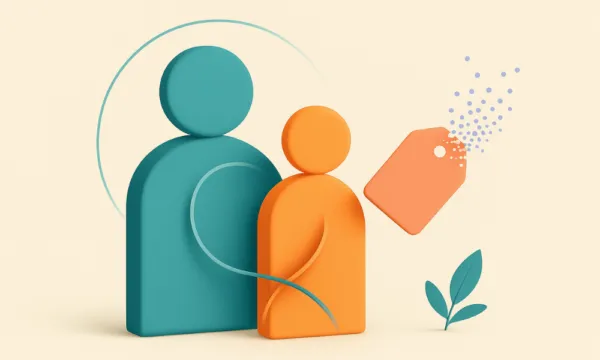
Few phrases land as hard as "toxic mother." It's sharp, loaded, and immediately stirs something in us – whether it's recognition, validation, defensiveness, or discomfort. The phrase has exploded in recent years, alongside the word "toxic" itself, which Oxford Dictionaries named Word of the Year in 2018 after searches jumped nearly 45%.
But while "toxic mother" captures attention, it also oversimplifies. In this article, I'll unpack why so many are using it, why it's become so sticky in popular psychology, and what we gain – and lose – when we label mothers in this way. Most importantly, I'll offer ways to move beyond the label toward deeper understanding and healing from painful mother-child dynamics.
Why "Toxic Mother" Has Stuck
Therapy buzzwords have exploded in the age of Instagram and TikTok, moving from graduate classrooms into everyday conversation. Words like "boundaries," "attachment styles," and "gaslighting" are now part of our cultural vocabulary. The phrase "toxic mother" fits right in. It's short, sharp, and immediately signals harm. More importantly, it gives people a way to name experiences that may have felt unspeakable for years.
The Rise of Therapy Language
According to The New Yorker's analysis of "therapy-speak," psychological terminology has moved from clinical settings into mainstream discourse, offering validation but sometimes oversimplifying complex dynamics. This cultural shift reflects both increased mental health awareness and the need for accessible language to describe relational pain.
Mother-child pain is not new – Freud pointed to it more than a century ago, and family systems theory doesn't work without understanding this mental health influence. What's new is increased collective willingness to say it out loud and the internet's ability to spread language that instantly feels relatable. "Toxic mother" has stuck because it's catchy, culturally recognizable, and captures something real that people feel desperate to put into words.
The Problem with the Word "Toxic"
The word "toxic" is powerful, yet misleading. It captures pain through a shorthand version of "relational harm" – but it also flattens people into labels instead of describing the real patterns at work in relationships. Licensed mental health professionals and academics do not use the word "toxic" clinically, because its literal meaning is "poisonous." To call a person "toxic" is metaphorical, not factual – no one is a walking chemical spill. When a metaphor is not only used, but overused, it distracts from the underlying behaviors that cause harm. Here are 13 words and phrases that might correctly describe what is happening:
- Emotional abuse
- Neglect
- Enmeshment
- Boundary violations
- Gaslighting
- Shaming
- Blaming
- Covert Aggression
- Passive Aggression
- Scapegoating
- Mocking
- Marginalization
- Stonewalling
Clinical Perspective on Language
If you find yourself wanting to use the phrase "toxic mother" consider naming it more accurately. What most people mean when they say "toxic" to describe a person they have/had a relationship with, usually involves something from the list of 13 harmful behaviors listed above. This matters for at least two reasons: 1) it's actually a more accurate and correct way to discuss what's happening; 2) the way we talk about a problem influences the way we solve it. There's much more opportunity to uncover healing opportunities when we use language that accurately describes what's happening.
Understanding the Mother-Child Relationship
The mother-child relationship is one of the most powerful and complex bonds we experience. It's often our first template for attachment – shaping how we're nurtured, how accurately we are seen, and how safe we feel in the world. When that bond is fragile, inconsistent, or painful, it leaves deep impressions on our self-concept and informs how we relate to other people.
What can be key is recognizing that these patterns are not random. Family systems theory and decades of attachment research show that emotionally damaging behaviors are often reenactments – echoes of unmet needs and unhealed pain passed down through generations. In this light, what we call a "toxic" relationship is often the visible symptom of an older story repeating itself within the family system.
Understanding Intergenerational Patterns
Research published in World Psychiatry demonstrates how trauma effects can be transmitted across generations through both psychological and biological mechanisms. When harm occurs in the mother-child dynamic, many times it is not intentionally cruel. Many mothers often act from what they've learned or haven't learned – maladaptive coping strategies, defenses, and blind spots that once helped them survive their own upbringing.
Recognizing this doesn't excuse harmful behavior or remove accountability, but it does help us understand why certain patterns persist and why change can feel so hard. When mothers are unwilling or unable to recognize this is the moment people start identifying with the word "toxic" – when communication totally breaks down and healing feels impossible.
When the Word "Toxic" Helps
The word "toxic" helps when it captures a reality that others can relate to. Even if it isn't technically accurate or used in clinical settings, if it helps you feel seen – or helps you see someone else more clearly – let it serve its purpose. We use language to connect, and sometimes the word and the shared understanding it creates are more powerful than the precision of what it describes.
Key Insight: Language as a Bridge
Just keep in mind that "toxic" may stop helping when you're trying to truly heal. It can express pain, but it can't resolve it. Let the word help you name the hurt, but if you're ready to heal, try moving beyond it. Whether or not your mother can join you in the process, you can still heal. Healing often begins when we step away from blame, stop hyper focusing on the other person, and move into deeper self-understanding.
Beyond the "Toxic Label": Toward Healing
When you're trying to heal with/from a painful or "toxic mother" relationship, the first step is to make some honest discernments: Ask yourself: Is my mother willing to heal with me – yes or no? If not now, maybe later; things can change. But you have to decide how you'll move forward today. I often recommend family therapy when possible, and sometimes each person having their own therapist, as well. Collaboration between therapists can be powerful when both sides are open to the process.
If that's not an option – if your mother isn't open, or she's no longer living – then the decision becomes yours alone. Too many people believe their healing depends on whether their mother heals with them, and that's one of the biggest misconceptions that keeps people stuck. Healing can happen together or apart, but it still has to happen (if you want it to). If it's apart, look for an individual therapist who understands these dynamics – someone who might read this article and say, "That makes sense to me, I can help you work through this." That's where your energy might flow: in the part of the process you can actually influence.
Professional Guidance Matters
According to research on family estrangement published in The Counseling Experiences of Individuals Who Are Estranged From a Family Member, therapeutic support becomes particularly crucial when navigating complex family dynamics. A skilled therapist can help you process pain, develop healthier patterns, and make informed decisions about your relationship – whether that means repair, boundary-setting, or healing independently.
Making Sense of the 'Toxic Mother' Label: FAQs
Can a "toxic mother" change?
Yes, a "toxic mother" can change if she's willing to reflect, consider multiple perspectives (beyond just yours), and work on herself.
What if my mother won't go to therapy?
If your mother won't go to therapy with you, you can still heal on your own. Your progress does not have to depend on her participation.
Should I cut off contact with my mom?
Cutting off contact with a mom is sometimes protective, but it's not always permanent. Boundaries can shift as healing happens.
Is it possible to love my mother and still call the relationship "toxic"?
It is possible to love your mother and still experience the relationship as "toxic." Love and harm co-exist in many places. Naming the pain doesn't cancel the love; it makes room for truth and complexity.
Holding Complexity
Healing from a painful mother-child relationship asks us to hold two truths at once: that real harm can occur, and that few people set out to cause it. The word "toxic" may help us name the pain, but lasting healing comes from accurately understanding patterns behind it – and deciding how we want to grow beyond them. Whether your mother can meet you in this process or not, your healing is still yours. It's not about excusing or forgetting; it's about choosing your clarity over confusion, curiosity over blame, and growth over repetition. Family pain runs deep, but so does resilience.
Sources & Research
- Oxford Languages – Word of the Year 2018 – https://languages.oup.com/word-of-the-year/2018/ - Accessed October 02, 2025
- Time – Gaslighting, Narcissist, and More Psychology Terms You're Misusing – https://time.com/6262891/psychology-terms-misused-gaslighting-toxic-narcissist/ - Accessed October 05, 2025
- The New Yorker – The Rise of Therapy-Speak – https://www.newyorker.com/culture/cultural-comment/the-rise-of-therapy-speak - Accessed October 05, 2025
- Association for Psychological Science – The Psychology of Framing: How Everyday Language Shapes the Way We Think, Feel, and Act – https://journals.sagepub.com/doi/10.1177/15291006241246966 - Accessed October 05, 2025
- World Psychiatry – Intergenerational Transmission of Trauma Effects – https://pmc.ncbi.nlm.nih.gov/articles/PMC6127768/ - Accessed October 05, 2025
- The Counseling Experiences of Individuals Who Are Estranged From a Family Member – https://www.researchgate.net/publication/336386638 - Accessed October 05, 2025

Dr. Dena DiNardo, Psy.D., LMFT
Clinical Psychologist
16 years of practice
Hi there! My clients call me Dena. I'm passionate about relationships and I offer high-impact sessions that diagnose problems, not people.
Recommended Articles