

Services
About My Clients
I work with adults, couples, partners, and polycules, with a particular focus on LGBTQ+, neurodivergent, kinky, polyamorous, and ENM clients. You may be navigating trauma, ADHD, anxiety, burnout, identity, attachment, intimacy, boundaries, trust, jealousy, or relationship patterns that keep showing up in different clothes. You don't need to fit neatly into a box here, and you won't have to spend therapy explaining or defending who you are or how you love.
My Background and Approach
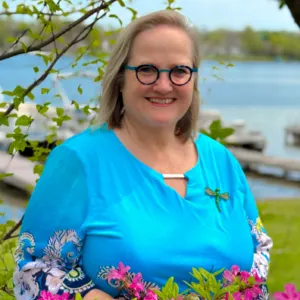
I'm Leah Cunningham, LCSW, owner of Every Love Therapy. I provide individual and relationship therapy in Richmond, VA and online throughout Virginia and New Jersey. My style is warm, collaborative, trauma-informed, sex-positive, and intentionally non-pathologizing. I draw from attachment-based and Emotionally Focused Therapy, along with CBT, mindfulness, and strengths-based approaches, adapting the work to the person or relationship rather than expecting you to adapt to the therapy. In relationship therapy, I focus less on deciding who is right and more on understanding the patterns people get caught in together and the needs underneath them. I work with monogamous couples as well as LGBTQ+, kinky, polyamorous, and ENM partners. With polycules, I consider the larger relationship system, including multiple attachments, relationships, boundaries, and agreements, rather than simply adding more people to a traditional couples therapy model.
My Personal Beliefs and Interests
I believe there are many healthy ways to be a person and many healthy ways to build a relationship. Being queer, kinky, polyamorous, non-monogamous, or neurodivergent is not something I automatically view as a problem to solve. I'm interested in what actually works for you. That means we can ask honest questions about consent, boundaries, attachment, communication, power, compatibility, identity, and change without starting from the assumption that there is one "right" outcome. Affirming therapy doesn't mean avoiding hard conversations. It means having them without a hidden agenda about who you should be or what your relationships should look like. I also believe people make much more sense when we understand the context around them. What looks like a flaw may be an adaptation, a protective strategy, a different way of processing the world, or a strength that has not always had the right environment in which to thrive. Therapy can make room for both the hard parts and the possibilities