-

- Find a therapist
-
Find help
Life Challenges
Relationships
Trauma and Healing
Therapy Methods
Body and Mind
- Tests
- Blog


Is ADHD Genetic? A Plain-Language Guide to What the Science Says
Austin Avison, M.A., M.S., TLLP on Nov 28, 2025
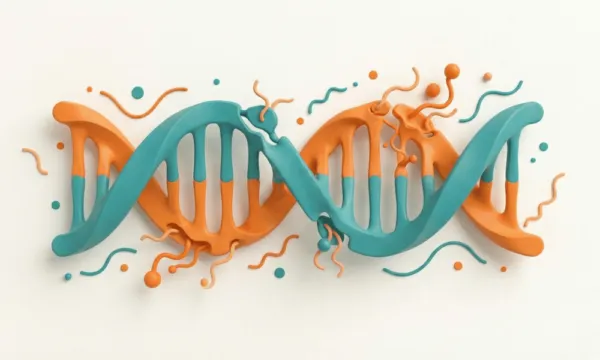
When people ask, "Is ADHD genetic?" the simplest accurate answer is mostly yes—genes play a major role, but they do not determine your future. ADHD tends to run in families, and many genetic factors shape traits like attention, activity level, and impulse control. But genes are only part of the picture. Environment, support systems, and daily coping strategies also influence how ADHD shows up in someone's life.
ADHD Strongly Runs in Families
Across decades of research, ADHD has shown high heritability—meaning that genetics explains a large portion of the differences in ADHD-related traits across people. Large-scale family and twin studies consistently estimate ADHD heritability around 70–80% (Faraone & Larsson, 2019).
However, heritable does not mean inevitable:
- Heritability is a population-level statistic — it does not mean a person's traits are "fixed" or unchangeable.
- People with ADHD often see major improvements when their environment supports how their brain works.
- Skills, therapy, school/work accommodations, and, for many, medication, all change daily functioning.
Genetics shape risk, not your potential or success.
There's No Single "ADHD Gene" — It's Polygenic
Modern genetic studies show that ADHD is polygenic, meaning many genes contribute, each with a small effect. A landmark analysis comparing nearly 39,000 people with ADHD to 187,000 without identified 27 genetic regions associated with ADHD (Demontis et al., 2019).
These genes are especially active during:
- Early brain development
- Brain communication (neurotransmission)
- Executive function processes
This supports ADHD as a neurodevelopmental condition — something rooted in how the brain organizes information and behavior, rather than a problem with motivation or character.
It also helps explain why:
- ADHD occurs on a continuum
- Not everyone in a family with ADHD will share the same expression of symptoms.
Rare Genetic Variants: Less Common, Bigger Impact
For most people, ADHD risk comes from many small genetic influences. But for a smaller group, rare genetic variants play a stronger role.
Two types stand out in research:
| Variant Type | What It Means | Key Insight |
|---|---|---|
| De novo variants | New genetic changes are not inherited from either parent | More common in some individuals with ADHD and overlaps with other neurodevelopmental conditions (Satterstrom et al., 2020) |
| Copy-number variants (CNVs) | Small missing or duplicated DNA segments | Linked to ADHD in some cases and may differ across sexes (Martin et al., 2022) |
These do not replace the polygenic picture — they layer onto it for a minority of individuals.
What About Polygenic Risk Scores?
Polygenic risk scores add up thousands of tiny genetic effects into a single number.
They currently show:
- Small, population-level predictive value
- No diagnostic use for individuals
In plain terms: They're useful in research, not for diagnosing ADHD (Wray et al., 2021).
If you see a company claiming to "test your DNA for ADHD," approach with healthy skepticism.
Genes Aren't Destiny: Environment Still Matters (A Lot)
Even with strong genetic influence, life experiences shape outcomes. Supportive environments can reduce symptoms and improve functioning, regardless of genetics.
Helpful supports include:
- Predictable routines
- Visual organization tools
- Reduced overstimulation
- Skills coaching
- Understanding teachers/employers
- Evidence-based therapy and medication
ADHD outcomes improve when the world is shaped to fit the brain, rather than asking the brain to fight itself.
And understanding the role of genetics often reduces shame (Faraone et al., 2021).
Common Myths, Explained Simply
| Myth | Reality |
|---|---|
| "There's a single ADHD gene." | ADHD is polygenic — many genes contribute (Demontis et al., 2019). |
| "High heritability means nothing helps." | Supports and treatment significantly improve functioning (Faraone et al., 2021). |
| "A genetic test can diagnose ADHD." | No available genetic test can diagnose ADHD (Wray et al., 2021). |
What This Means for Families
If ADHD "runs in your family," you are in good company.
This can actually make things easier:
- Many parents recognize their own traits while supporting their child.
- Families can build household systems that help everyone.
- Understanding the biological basis helps replace blame with compassion.
And that goes a long way.
Finding Support & Therapy Options
For clients and caregivers seeking ADHD-informed therapy, TherapyDen offers a helpful overview of how psychologists and therapists can support executive functioning skills, emotional regulation, and daily life planning. This resource can also assist in locating clinicians who specialize in ADHD across different age groups.
Find ADHD-Specialized Support
Connect with therapists who understand ADHD and can help with executive functioning, emotional regulation, and daily life planning.
Find an ADHD TherapistSources & Research
References
Demontis, D., Walters, R. K., Martin, J., Mattheisen, M., Als, T. D., Agerbo, E., ... & Neale, B. M. (2019). Discovery of the first genome-wide significant risk loci for ADHD. Nature Genetics, 51(1), 63–75. https://doi.org/10.1038/s41588-018-0269-7
Faraone, S. V., & Larsson, H. (2019). Genetics of attention deficit hyperactivity disorder. Molecular Psychiatry, 24(4), 562–575. https://doi.org/10.1038/s41380-018-0070-0
Faraone, S. V., Asherson, P., Banaschewski, T., Buitelaar, J., Franke, B., Rohde, L. A., ... & Reif, A. (2021). Attention-deficit/hyperactivity disorder. Nature Reviews Disease Primers, 7(1), 1–23. https://doi.org/10.1038/s41572-024-00495-0
Martin, J., Tammimies, K., Karlsson, R., & Lichtenstein, P. (2022). Copy number variation and ADHD: A population-based study. Journal of Attention Disorders, 26(4), 543–556. https://doi.org/10.1002/ajmg.b.32685
Satterstrom, F. K., Walters, R. K., Singh, T., Wigdor, E. M., Lescai, F., Demontis, D., ... & Neale, B. M. (2020). Autism spectrum disorder and ADHD have a similar burden of rare protein-truncating variants. Nature Neuroscience, 23(4), 477–485. https://doi.org/10.1038/s41593-019-0527-8
Wray, N. R., Wijmenga, C., Sullivan, P. F., Yang, J., & Visscher, P. M. (2021). Common disease genetics: Polygenic risk scores and beyond. Nature Reviews Genetics, 22(10), 581–589. https://doi.org/10.1038/s41588-018-0183-z

Austin Avison, M.A., M.S., TLLP
Clinical Psychologist — Ferndale, MI
2 years of practice
I am a clinical psychologist (TLLP) and university lecturer, blending evidence-based therapy with academic & research-driven insight.
Recommended Articles