

Services
About My Clients
You're the guy others rely on. You handle it. But something's been off for a while, and you're tired of pretending it hasn't. You're probably not in crisis — just wired, irritable, burned out, or starting to ask if this is it. Maybe it's friendships that thinned out somewhere in your 30s, or inherited rules about what "being a man" means that you never actually chose. I also see teens and young adults. Plenty have never been in therapy. There's no wrong way to start.
My Background and Approach
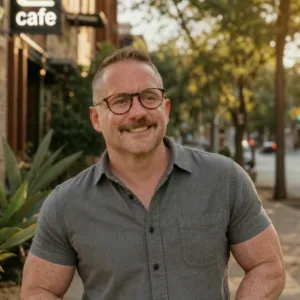
Therapy is my second career. I spent over a decade running teams at tech startups (MBA, University of Chicago; MSW, Fordham) before becoming a therapist. Turns out the part I was actually good at was the people — hiring them, building them, mentoring them. Many clients say that background helps; work and identity are tangled for most of us. Therapy with me is collaborative and a little irreverent. I ask a lot of questions and make few assumptions. Often the answer is already in what you're saying — you're just too in the weeds of your own life to catch it. My job is to listen closely and hand it back to you. I'll be your head cheerleader, quick to name your strengths and celebrate wins big and small. But I don't think therapy should be an echo chamber. I'll challenge you, to the extent you're ready. I don't run a one-size protocol. I bring in pieces of CBT, DBT, mindfulness, and solutions-focused work — whatever actually fits the person in front of me.
Why I am a Good Fit for You
I believe most men have been handed a set of rules about manhood they never got to examine. Some are worth keeping — showing up, being reliable, taking care of people. Others cost them their friendships, their health, and their honesty. I'm not interested in tearing masculinity down. I'm interested in helping men decide, deliberately, which parts of it are actually theirs, and which ones they've just been carrying because nobody told them they could put them down. Men underuse therapy. They tend to show up late, at a crisis point, having tried everything else first. I'd like that to change, and building a practice for men is how I'm trying. A few things about me: I'm sober. I'm a very active Guncle. My practice is LGBTQ+ affirming — you won't have to explain or defend your identity or your relationship structure before we can get to work. And I think therapy should be practical, honest, and worth what you're paying for it.