

Services
About My Clients
My clients are professionals, parents, and high-achievers who appear successful from the outside but feel stuck, anxious, burned out, or disconnected within. They come during periods of stress, trauma, grief, relationship change, career transition, or simply when high-functioning lives stop feeling whole. Many are executives, physicians, founders, and attorneys seeking depth work that fits demanding schedules. All want a therapist who understands the weight of responsibility from the inside.
My Background and Approach
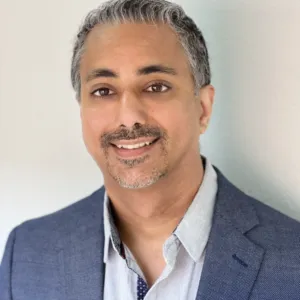
My background is unusual for a therapist. Before becoming a Licensed Professional Counselor, I spent seventeen years in senior higher education leadership, most recently as Executive Director of Student Affairs at the University of Houston. I sat in the executive seat myself before transitioning to clinical practice — and that lived perspective informs every session. I trained at Columbia University (dual master's in Psychological Counseling, 2004), licensed as an LPC in 2017, and have worked across university, organizational, and clinical settings. My method is integrative. I draw from evidence-based psychotherapy — Cognitive Behavioral Therapy (CBT), Dialectical Behavior Therapy (DBT), psychodynamic, existential, humanistic — and weave in contemplative practices from Zen, Taoism, and Yoga. Mindfulness, breathwork, and guided meditation are part of the work when they serve. The approach is tailored, not formulaic.
My Personal Beliefs and Interests
I believe each person carries within them the capacity for clarity, resilience, and meaningful change — even when life feels stuck or overwhelming. My work is grounded in this conviction: we cannot fully control the automatic thoughts that pass through our minds, but we can train the inner voice that responds to them. That single distinction, drawn from the contemplative traditions of Zen and Yoga and reinforced by modern cognitive science, is the leverage point of much of my clinical work. I believe healing is rarely about eliminating distress and almost always about expanding our relationship to it — through awareness, acceptance, skill, and practice. Eastern traditions taught me wu wei (effortless action) and witnessing without grasping; Western therapy taught me evidence-based skill-building and structural change. Both matter. Neither alone is enough. I believe people are not their symptoms. They are whole.