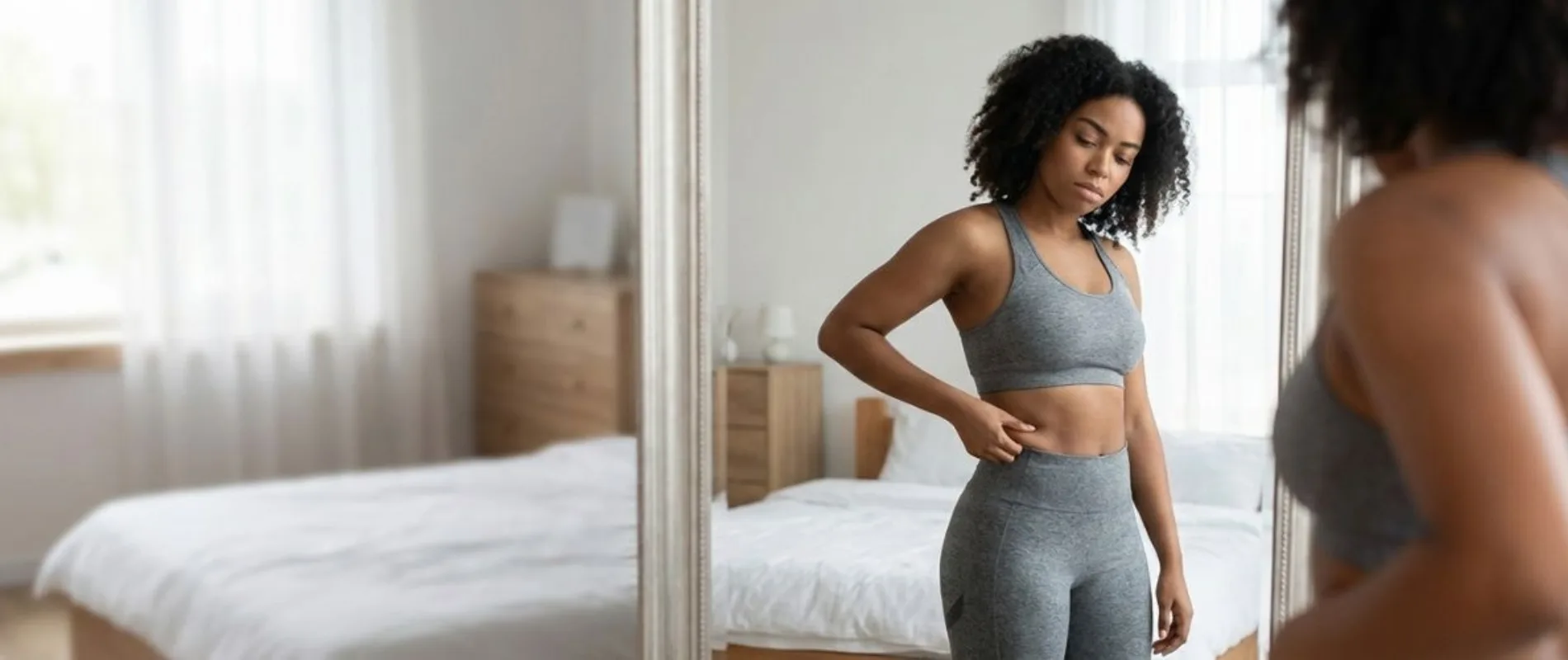
Body Dysmorphia Test: Screen for Obsessive Appearance Fears

20 Questions

3 minutes

Do you obsess over a perceived flaw that others barely notice? Body dysmorphic disorder affects millions, yet most wait 17 years for an accurate diagnosis (IOCDF). This free educational screening helps you recognize patterns and decide if professional support may help. This is not a diagnostic tool.

Using the key below, please indicate how much each statement has applied to you over the past 12 months. (Scale: 1 = Not at all, 2 = A little bit, 3 = Moderately, 4 = Quite a bit, 5 = Extremely)

Disagree

Neutral

Agree

1.

I spend hours every day worrying about specific flaws in my appearance.

Disagree
Agree
2.

I feel a strong urge to check my appearance in mirrors or reflective surfaces repeatedly.

Disagree
Agree
3.

I usually believe people when they tell me my physical flaws are not a big deal.

Disagree
Agree
4.

I have avoided social situations because I felt too ugly or defective to be seen.

Disagree
Agree
5.

Unwanted negative thoughts about my looks pop into my head and are hard to stop.

Disagree
Agree
6.

I use special clothing, heavy makeup, or specific body positions to hide the parts of me I dislike.

Disagree
Agree
7.

I feel intense shame or disgust when I focus on the features I dislike.

Disagree
Agree
8.

My concerns about my appearance rarely interfere with my ability to get my work or schoolwork done.

Disagree
Agree
9.

I am convinced that others are staring at or judging the specific defect I see in myself.

Disagree
Agree
10.

I pick at my skin, pull my hair, or groom excessively to try and fix my appearance.

Disagree
Agree
11.

I compare my specific physical features to those of other people almost constantly.

Disagree
Agree
12.

I am often late for appointments because I get stuck fixing my appearance.

Disagree
Agree
13.

I generally feel comfortable in my own skin.

Disagree
Agree
14.

I take many photos of myself or use filters to check how I look or hide my flaws.

Disagree
Agree
15.

I worry that my physical defects are the first thing people notice about me.

Disagree
Agree
16.

I avoid bright lights, mirrors, or specific angles to prevent seeing my flaws.

Disagree
Agree
17.

If I cannot check or fix my appearance, I feel extremely anxious or distressed.

Disagree
Agree
18.

My focus is often on a specific body part (like my nose, skin, or hair) rather than just my overall weight.

Disagree
Agree
19.

I frequently ask friends or family if I look okay, even if they have already told me I do.

Disagree
Agree
20.

I have considered or sought cosmetic treatments for defects that others say are minor.

Disagree
Agree

Disclaimer: TherapyDen’s online assessments are for informational and educational purposes only and are not medical or mental-health diagnoses. Do not start, change, or stop treatment based on results. Only a licensed clinician can diagnose. Not for children under 13.

We do not link your answers to your identity. Limited technical data may be collected for site functionality and analytics; manage choices in our Privacy Policy and Cookie Preferences, including “Do Not Sell or Share My Personal Information” where applicable. We do not use your responses for advertising or share them with advertisers.

If you are in crisis, call 988 (U.S.) or your local emergency number.

Reliable Body Dysmorphia Test & Symptom Checker

This screening tool assesses potential signs of Body Dysmorphic Disorder (BDD) based on DSM-5-TR criteria and current clinical research. It evaluates key symptom domains, including obsessive preoccupation, compulsive behaviors, and functional impairment, to help you understand your appearance-related distress. While this educational quiz provides valuable insight into your mental well-being, it does not replace a professional evaluation or medical diagnosis.

Methodology & Test Limitations

This screening tool incorporates principles from validated instruments such as the Body Dysmorphic Disorder Questionnaire (BDDQ) and the BDD-YBOCS. It measures specific dimensions including intrusive thoughts about perceived flaws, repetitive grooming or checking rituals, and the impact these have on your daily life. However, this online assessment is designed for educational purposes only and cannot provide a formal diagnosis. Results may be influenced by self-reporting biases or the level of insight a person has regarding their condition. This test is intended for adults seeking to evaluate whether their symptoms warrant professional attention.

Scientific References

Privacy & Data Security

We prioritize your confidentiality above all else. This screening tool is completely anonymous and does not collect or store any personally identifiable information. Your responses are processed locally on your device, meaning no data is sent to external servers. You can explore your results with full peace of mind, knowing your digital privacy is protected throughout the entire assessment process.

Understanding Your Score

Your total score is calculated by summing your responses on a 5-point scale, with specific items mathematically adjusted to account for reverse scoring. A higher total result indicates a greater likelihood of symptoms associated with Body Dysmorphic Disorder, such as intense distress and ritualistic behaviors. Conversely, a lower score suggests fewer clinical concerns. Please remember this result is indicative only. If your score is elevated or if you experience suffering regardless of the number, we strongly recommend consulting a qualified mental health professional.

Body Dysmorphia Test: Your Questions Answered

These answers address real doubts from clinical research and community discussions, helping you interpret your screening results with clarity.

How do I know if I have body dysmorphia or just low self-esteem?

The difference is intensity and control. BDD involves fixating on perceived flaws for one or more hours daily, feeling unable to redirect your thoughts even when you try. Normal insecurity fades when you get busy. BDD follows you into work meetings, social plans, and quiet moments alone. If appearance concerns disrupt your ability to function, a therapist specializing in body image issues can help you understand what's driving the distress.

Can body dysmorphia make me see a completely different face in photos versus mirrors?

This disconnect is neurological, not imagined. Research shows BDD affects how the brain processes visual details: you zoom in on specific features rather than seeing the whole. Mirrors and cameras also activate different perceptual pathways, which explains why your reflection can feel acceptable while a photo looks unrecognizable. The distress about this inconsistency is itself a hallmark of BDD.

What is reverse body dysmorphia and can this test detect it?

This term usually describes muscle dysmorphia: perceiving yourself as smaller or weaker than you actually are, despite visible muscle mass. This variant primarily affects men and often involves compulsive weightlifting, rigid dieting, or steroid use. Standard screenings may miss it because questions focus on feeling "too big." If you identify with seeing yourself as insufficiently muscular, raise this directly with a clinician for targeted assessment.

What's the difference between body dysmorphia and an eating disorder?

BDD targets specific features: your nose, skin, jawline. Eating disorders revolve around overall weight and shape, with behaviors like food restriction or purging. The overlap can confuse people because about 32% with BDD also have an eating disorder. If your distress involves both a particular body part AND your weight, you may need evaluation for both conditions since treatments differ.

QR Code

Body Dysmorphia Test: Screen for Obsessive Appearance Fears

QR Code